idioma
  English
Two smart locks sit on the same shortlist for a fleet of outdoor electrical cabinets. Both carry a 4.7-star average, both promise app control, and both use the phrase "military-grade security" somewhere in the listing. After one coastal winter, the first still works; on the second, the keypad is dead and the cylinder has corroded shut. The reviews were not wrong, exactly. They simply never tested the things that failed.
The conclusion comes first: a smart lock review is only as useful as the test behind it, so check what was measured, under what conditions, on which exact variant, and for how long before you trust any rating. The sections below cover what a credible review should measure, why consumer review scores rarely transfer to industrial cabinets, which red flags matter most, and how to run a short field evaluation that beats a hundred page-one ratings.
What a Credible Smart Lock Review Should Actually Measure
A review worth your time tests five areas and reports numbers rather than adjectives:
- Physical attack resistance — how the lock responds to pulling, prying, and turning force. Industrial lock datasheets publish static load ratings (commonly 270N, 300N, 360N, 580N, up to 970N) and operating torque figures in the 9–40 N·m range. A review that never states a force, torque, or cycle number has unboxed the lock, not tested it.
- Credential management — how keys, codes, or app permissions are issued, revoked, and audited. In shared or unattended sites this matters more than raw encryption claims.
- Power behavior — battery life under a realistic duty cycle, low-battery warnings, and what happens when the power runs out completely.
- Environmental tolerance — the temperature range, water and dust protection, and corrosion exposure the lock survived, not just showroom conditions.
- Failure and recovery — whether a mechanical override or emergency unlocking path exists, and whether the reviewer actually tried it.
If all five are missing, treat the star rating as decoration.
Why Consumer Review Scores Do Not Transfer to Industrial Cabinets
Most smart lock reviews online describe residential door hardware: a 35–45 mm wood or metal door, a sheltered entryway, a few open-close cycles per day, and an owner at home when something goes wrong. Industrial cabinets flip every one of those assumptions. Enclosure doors on transformers, telecom sites, and distribution boards may cycle thousands of times a year, stand in full sun and driving rain, get serviced by rotating crews, and cannot wait three hours for a technician with a dead battery.
| Review Criterion | What Consumer Reviews Emphasize | What Industrial Buyers Should Verify |
|---|---|---|
| Installation base | Standard residential doors, roughly 35–45 mm | Exact panel thickness, cutout size, and door swing direction |
| Security testing | Deadbolt and hinge-side forced entry on a home door | Cylinder attack resistance, load ratings, and multi-point locking on thin steel panels |
| Weather exposure | Sheltered porches and occasional rain | IP-rated sealing, salt-spray corrosion, full temperature range |
| Usage pattern | A few cycles per day by family members | Thousands of cycles per year by rotating crews and contractors |
| Access control | Household codes and a smartphone app | Temporary authorization, expiry, and audit trails for third parties |
| Failure plan | A spare key at a neighbor's house | Remote unlock, electronic key backup, or a defined emergency override |
This does not make consumer reviews worthless — they are a fair signal for app quality and setup friction. They simply say little about whether a lock survives the environment your cabinet actually lives in.
Red Flags to Watch For While Reading
- Five-star reviews with no specifics. If nobody mentions test duration, environment, or failure modes, the amount of real information is zero.
- "Waterproof" without an IP number. Ingress protection is standardized — IP65 and IP66 are common targets for outdoor enclosures — and a vague adjective is not a rating.
- Battery claims without a duty cycle. "One-year battery life" means little until you know how many unlocks per day it assumes.
- No backup path mentioned. Every electronic lock can fail; the question is whether unlocking without power or network was ever attempted.
- Reviews of a different variant. Cabinet locks ship in many configurations — with or without a lock cylinder, adjustable or fixed, zinc alloy or stainless steel — so one variant's results tell you little about the one quoted to you.
- App polish mistaken for security. A polished interface says nothing about the cylinder, the latch, or the mounting.
Environmental Ratings Deserve More Weight Than They Get
For outdoor, coastal, or washdown installations, sealing and corrosion resistance determine lifespan far more than any connected feature. An IP65 rating means dust-tight and protected against water jets; IP66 adds protection against heavy jets and waves. Beyond ingress protection, ask about material — SUS304 stainless is the baseline for corrosive environments, with SUS316 preferred near saltwater — and whether waterproof covers or dust covers are available to shield the cylinder from standing water.
A review conducted on a dry office door for two weeks cannot speak to any of this. Specification sheets can. Transformer and distribution cabinets are exactly where a sealed, box-type electronic lock earns its keep:
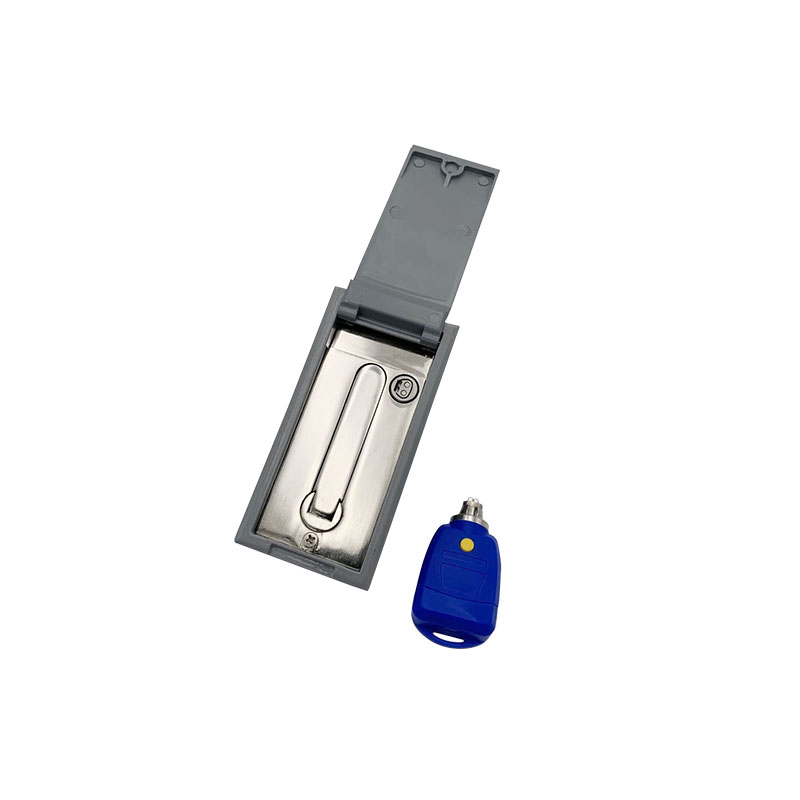 DS888-2 Waterproof Box-Type Passive Electronic Transformer Lock Designed for transformer and distribution cabinets, this box-type passive electronic lock combines sealed waterproof housing with electronic key unlocking, making it a relevant option where outdoor exposure and wet conditions must be considered. View Product →
 A waterproof box-type housing paired with electronic key unlocking is the kind of combination you only find by reading specifications, not star summaries.
What "Smart" Should Actually Mean in a Review
Active versus passive electronic locks
Consumer reviews rarely explain this distinction, yet it drives reliability in the field. An active electronic lock carries its own power and electronics in the lock body and usually supports several unlocking methods — app, code, card, or remote command. A passive electronic lock has no battery in the lock at all; the electronic key powers it at the moment of unlocking. Fewer onboard components mean fewer parts to fail inside a hot, humid cabinet, which is why passive designs are common for unattended infrastructure.
Ningbo Oubao Technology, an industrial lock manufacturer, has developed more than a dozen electronic lock models covering app unlocking, temporary authorization through WeChat, remote wireless unlocking, and a Bluetooth copper key for emergency opening. For a review-minded buyer, the feature list matters less than whether the whole workflow was tested: issuing a credential, setting an expiry, revoking it, and confirming the audit trail recorded each event.
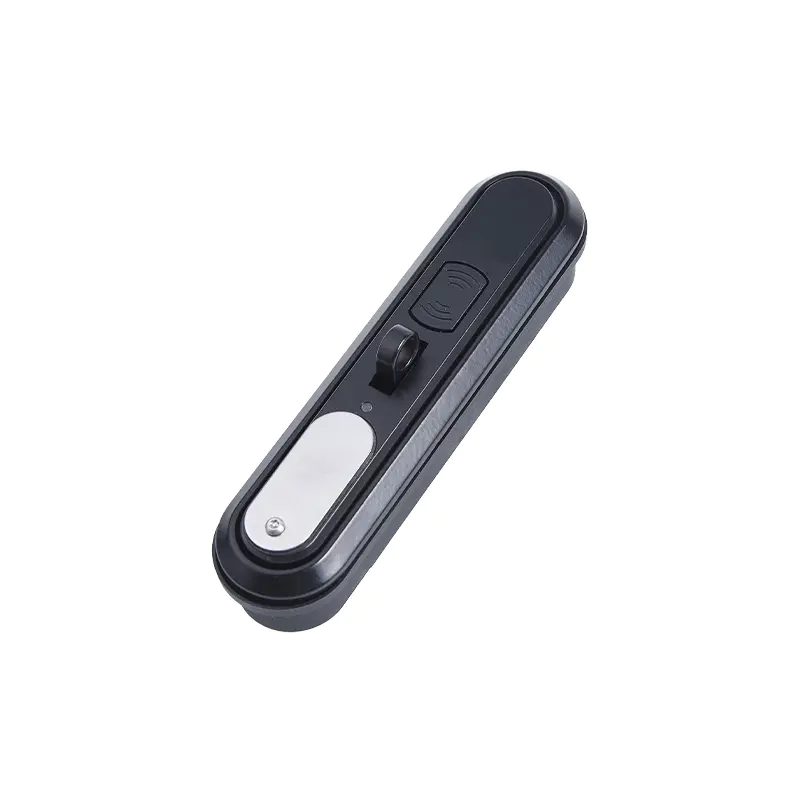 DS864-2P Active Electronic Lock With Multiple Unlocking Methods This active electronic lock supports app unlocking, WeChat temporary authorization, remote wireless access, and Bluetooth copper key emergency opening, suiting teams testing complete credential workflows from issuance to revocation and audit. View Product →
 An active lock of this type suits teams that want app-based, credential-based, and remote workflows in one body. For a closer look at the operational side, our article on how active electronic lock technology redefines industrial access control walks through the day-to-day changes.
Temporary authorization and audit trails
Concrete scenario: a contractor needs one afternoon of access to a cabinet bank. With a mechanical key you hand over a key and hope. With a tested electronic system you issue a temporary authorization that expires that evening, then pull the unlock records to confirm what happened. Reviews that only test "does it open" miss the half of the product that actually reduces risk.
The Mechanical Backbone Still Decides the Outcome
Electronics fail eventually; the mechanical structure stands behind that failure. Compare locking architecture the way you would for a purely mechanical lock: single-point latches suit light doors, while larger or higher-risk doors justify multi-point designs that throw steel rods into the frame at two or three positions. Cylinder choice matters too — tool-operated triangle or hexagonal 8mm cylinders for low-risk utility panels, keyed cylinders where unauthorized opening has real consequences. Our overview of the types and uses of cabinet cylinder locks explains how those families differ.
Where security expectations are high, some designs merge both worlds — a three-point locking passive electronic lock in a zinc alloy body keeps the electronic key workflow while the linkage does the heavy holding:
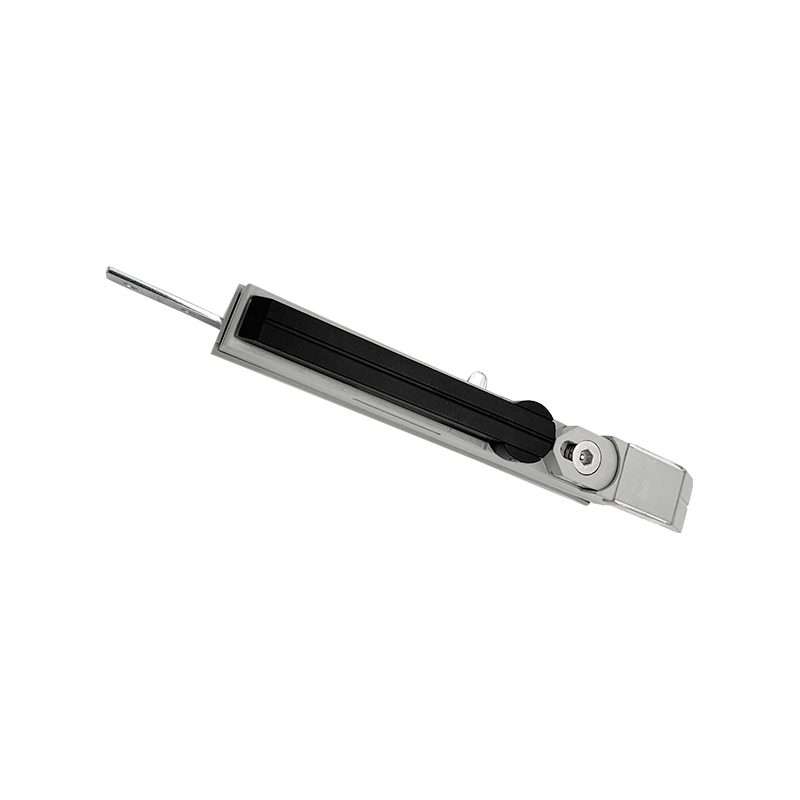 DS830-3D Zinc Alloy Three-Point Locking Passive Electronic Lock A zinc alloy passive electronic lock with three-point locking linkage, it keeps the electronic key workflow while providing stronger holding force, making it worth comparing for high-security cabinet applications with demanding load requirements. View Product →
 Numbers worth comparing across datasheets: static load ratings (a light panel lock may be rated 270N, a heavy-duty unit 580N or 970N), operating torque, door thickness range, and rotation angle. Those are the figures a genuine stress review would report.
Run Your Own Two-Week Field Review
A short, structured pilot on your own cabinets beats any page-one rating because it tests your real doors, users, weather, and workflows. A practical sequence:
- Define the duty cycle first — expected openings per day, indoor or outdoor mounting, and the hottest and coldest sites in your network.
- Order samples of the exact variant you intend to purchase, not the closest equivalent.
- Verify mounting fit on your actual panel thickness and cutout, including hinge and handle alignment.
- Cycle each sample several hundred times with the people who will really use it.
- Run the full credential workflow: issue, temporary authorization, expiry, revocation, and audit-trail export.
- Leave one sample outdoors through the worst weather week available, then inspect seals, cylinder, and finish.
- Score against weighted criteria tied to your application and ignore the star metaphor entirely.
A five-star review and a one-star review can describe the same lock tested by different methods. Read smart lock reviews as reports about test methods first, then match the lock class to the cabinet: sealed and corrosion-resistant outdoors, multi-point where doors are large, managed electronic credentials where access must be recorded. Manufacturers that publish load ratings, torque figures, material grades, and variant options openly make the whole evaluation easier — the difference between reviewing data and reviewing adjectives. When you are ready to compare specific hardware, the specifications on our product pages give you real numbers to score against.